
INTRODUCTION TO TANZANIA
The United Republic of Tanzania is a global leader in wildlife conservation. The country has set aside 33.5% of its terrestrial area for conservation and has made significant investments in protecting its wildlife. Furthermore, Tanzania is one of the few nations to commit to conserving wildlife corridors. Tanzania is further unique in that is protecting areas large enough to conserve viable populations of globally valued, charismatic wildlife. The country is spectacularly diverse and beautiful with exceptional wildlife and iconic landmarks such as the Ngorongoro Crater (the world’s largest unflooded intact volcanic caldera – the home of black rhino), Mt. Kilimanjaro (Africa’s tallest mountain), Great Rift Valley on Earth (stretches from the Middle East in the north to Mozambique in the south) Serengeti National Park (The famous wildlife endless plain) Nyerere National Park (Largest National Park in Africa (formerly Selous game reserve), Africa’s largest lake (Lake Victoria), Lake Tanganyika (an African Great Lake. It is the second-oldest freshwater lake in the world, the second-largest by volume and the second-deepest) and Zanzibar Island (the spice Island and white-sand beaches with palms swaying lazily in the sea breeze The country supports very high predator densities over 50% of East Africa’s lions, leopard, cheetah, wild dog and hyena. Tanzania has no less than 35 species of antelope and a staggering number of wildebeest, Zebra, Giraffe and being a home to 35% of East Africa’s elephants and most of East Africa’s hippos. As a result, Tanzania remains a stronghold for many species of conservation and one of the best game viewing areas on the continent. There is great chimpanzee trekking at Mahale in the west and also southeast lies one of the world’s largest National park – the Nyerere National Park (previously Selous game reserve)
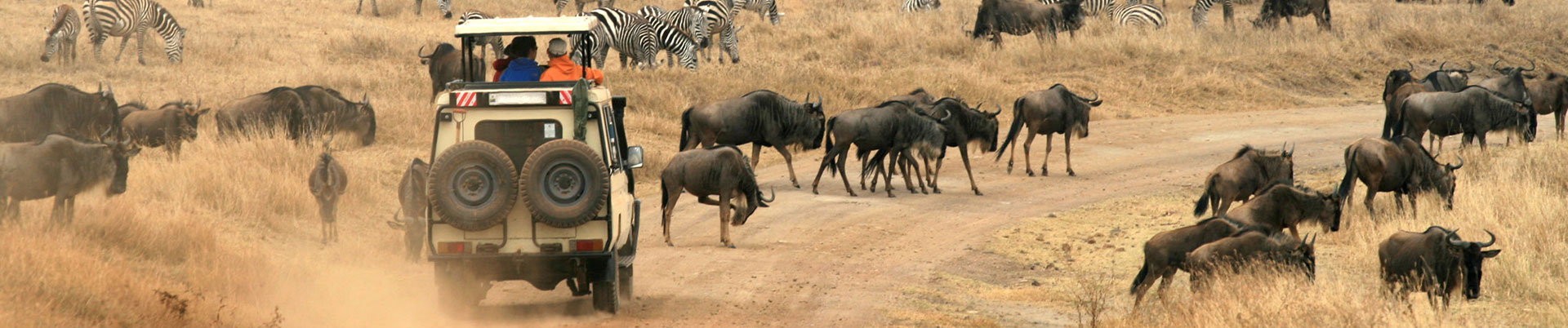
Tanzania is one of the best wildlife countries in the world for mobile seasonal tended camp safaris. Vehicles with roof hatches or pop-tops are used on driving safaris. Safari camps and lodges that have guide and vehicles based at them may in many cases use open-sided vehicles similar to those used in many parks and reserves in East Africa. If guests accompanied by armed guide from the national park, walking is allowed in all national park, areas for walking have been designated in all parks, conservation areas and game reserves.
The best weather for viewing game in northern Tanzania is June through March. Late December to February and July and August and September are the busiest periods. April and May is traditionally the rainy season and travel in 4WD vehicles is normally used. Advantage of travelling in April and May include lower rate, fewer tourist and great game viewing. The Northern Circuit, traditionally includes: Arusha National park, Tarangire National Park, Manyara National Park, Ngorongoro Conservation Area Authority, Serengeti National Park and Mt. Kilimanjaro National Park. Other areas of interest include, Mount Meru, Mount Oldonyo Lengai Ndarakwai Ranch, Sinya, Lake Eyasi (great opportunities for cultural experience) Manyara Ranch Conservancy, Grumeti reserves.
Tanzania indeed has it all, Tanzania has 22 National Parks, 1 conservation area, 27 Game Reserves, and several Marine Parks, a breathtaking coast and Lake Zone and gently undulating highlands that are a hiker’s paradise.
Guests/visitors reach northern or Arusha and gateaway to the area, by flying directly into Kilimanjaro International Airport. Others fly into Nairobi (Kenya) and then take a 1-hour flight to Kilimanjaro or a 5 hours’ drive via Namanga to Arusha, or they fly into Dar es Salaam and then take an hour flight to Kilimanjaro or Arusha airport. Kilimanjaro International is located 34 miles (54km) east of Arusha and 22 miles 35 km) west of Moshi and has a bank, bar, shops and a restaurant.